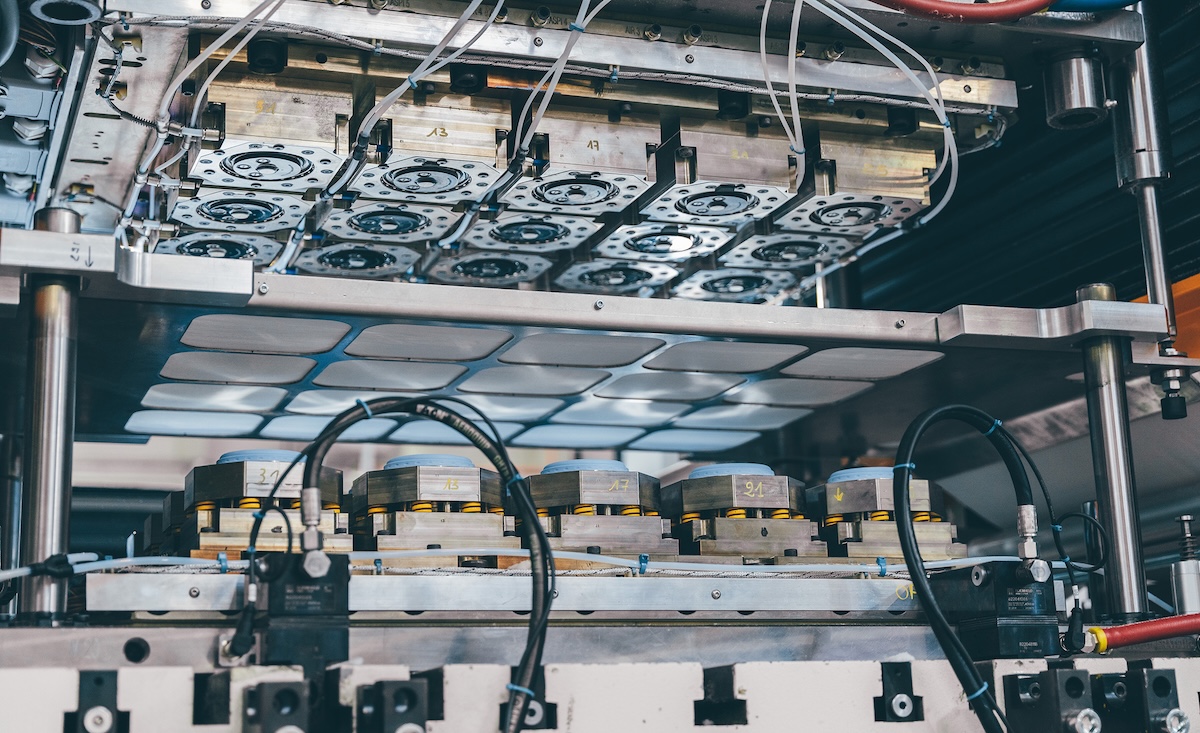






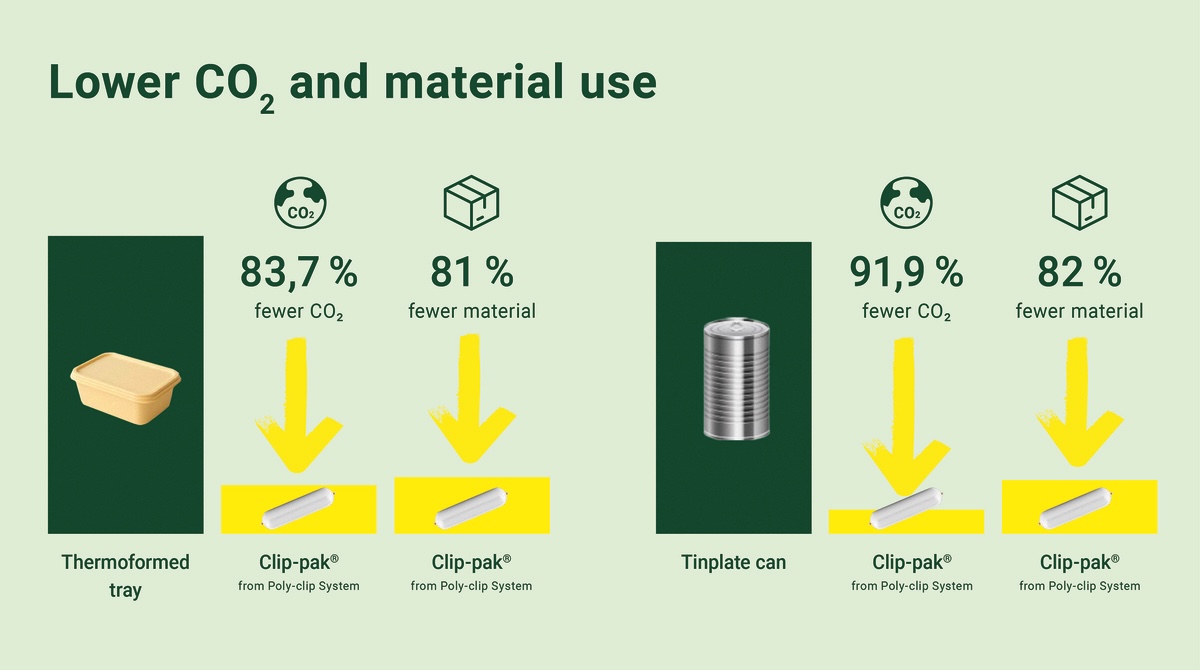
Sustainable packaging is not merely an aesthetic choice, it is, above all, a structural one. Designing packaging today means thinking in terms of life cycles, selecting solutions that minimise material use without compromising product protection. clipping technology by Poly-clip SystemPoly-clip System at Interpack 2026 is a concrete example: the product is sealed directly after filling, eliminating additional processing steps. The result is packaging that accounts for just one to two percent of total weight, compared to up to 35 percent for some conventional alternatives. Less material, less waste, fewer emissions. For designers, this translates into creative freedom within virtuous constraints: compact forms, precise closures, and a design logic that starts at the end (at recycling) and works its way back to the beginning.
For purchasing: sustainability as an economic lever
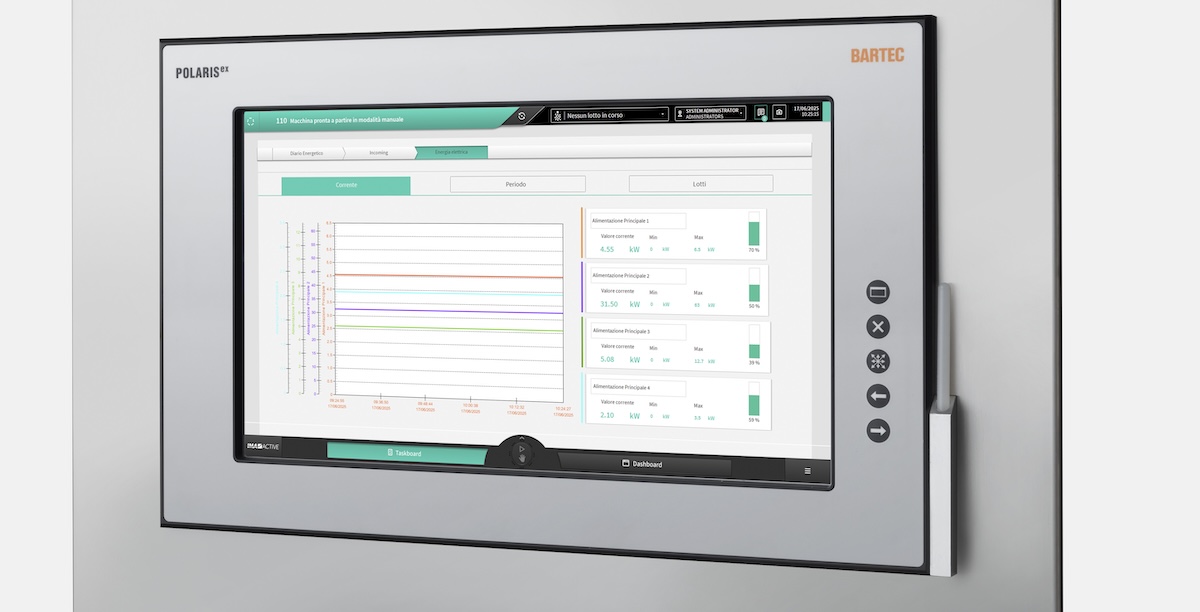
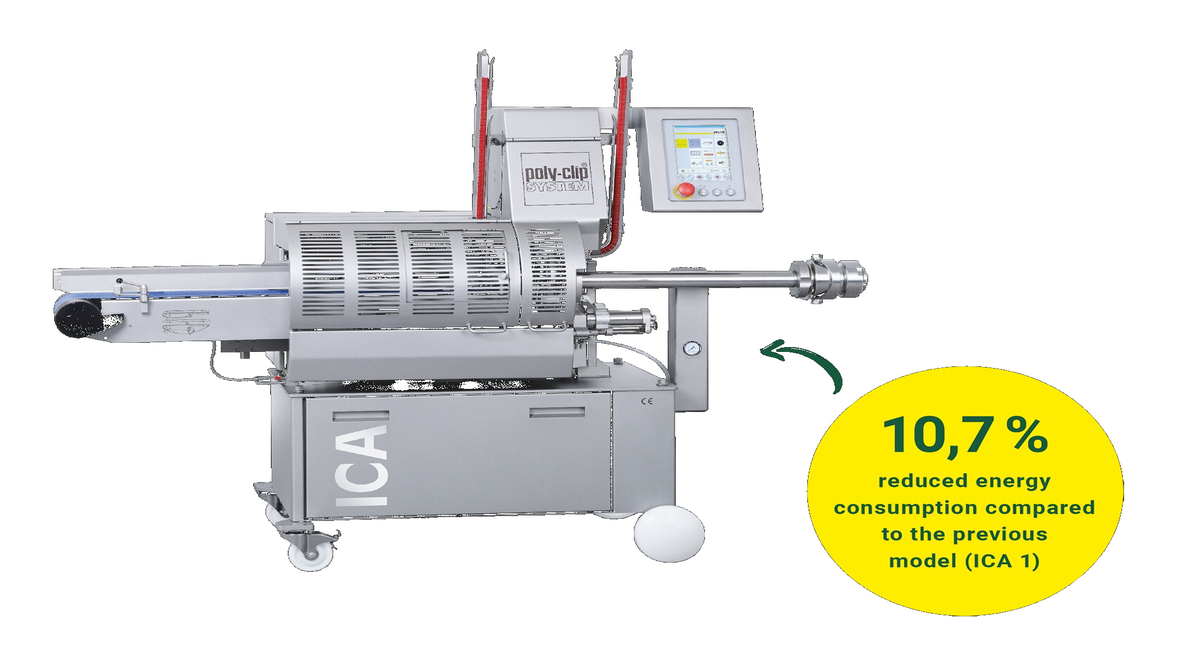
Those managing procurement in the food industry know that sustainability can no longer be treated as an added cost. Data presented at Interpack 2026 demonstrate the opposite: low-impact packaging solutions reduce energy consumption in production, cut logistics costs through more compact formats, and open access to government incentive programmes. Poly-clip System's new ICA 4.3 machine, for instance, consumes 10.7% less energy than a model from 2003 while maintaining high performance levels. For purchasing departments, this means negotiating not just the unit price, but the total cost of the production cycle. The short supply chain — over 90% of Poly-clip System's suppliers are based in Germany, within a radius of 300 kilometres — further reduces transport emissions and increases supply chain resilience.
For steel, tinplate and glass producers: the comparison is open
Independent research conducted by Circular Analytics (Vienna, December 2025), commissioned by Poly-clip System, presents data that the traditional materials sector cannot ignore. Compared to conventional packaging such as tinplate cans, cartridges or thermoformed trays, clip packaging reduces CO₂ emissions by up to 90%. This is a significant gap, driven not by material alone but by the entire system: production, filling, transport and disposal. Steel and glass producers are called upon to respond to this challenge through process and product innovation — lightweighting, optimisation of firing and melting cycles, and the development of new alloys or glass compositions with lower energy footprints. The comparison with alternative solutions can become a spur to innovation rather than an existential threat.
For waste sorting and recycling operators: closing the loop for real
Separate waste collection works when packaging is designed to be recycled. This principle, which may seem obvious, is still far from universal. Recycling operators deal daily with mixed streams, composite materials that are difficult to separate, and packaging that — while theoretically recyclable — is not so in practice. The clipping solutions presented at Interpack 2026 move in the right direction: mono-material structures, reduced additives, and a systems logic that already accounts for end-of-life at the design stage. The SafeCoat® coating on the clips, for example, is designed to reduce mechanical wear and extend machine service life, but also to simplify the separation process. The challenge for the recycling sector is now to engage in dialogue with designers, producers and clients to define shared standards that make circularity not the exception, but the norm.